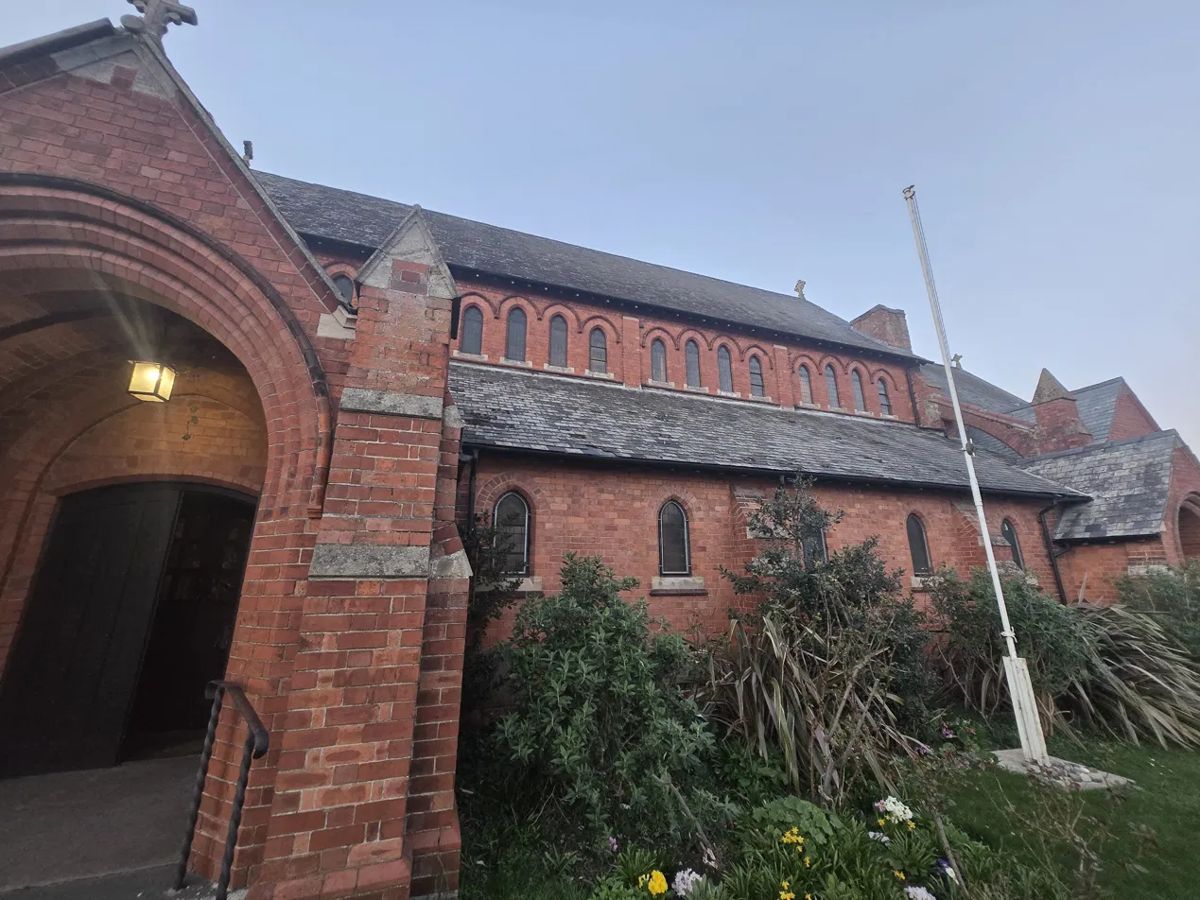
Nobody in my family had done this before. There was no tradition being carried on, no grandmother being pleased, no cultural box being ticked. I was a man in his late thirties who had spent his whole adult life as an atheist, standing at the edge of a pool in a Swindon church, about to go under the water in front of a congregation. If you are wondering what that feels like, this is my attempt at an answer.
I arrived at St Philip's that morning with a feeling I had not had before. A settled joy. Not the nervous anticipation of an uncertain thing, but the calm certainty of a right one. I stood for a moment in the church before the service began and felt the stillness of a space that has been holding people's most significant moments for generations.
The pool had been prepared. My oldest son Riley was already in the water when I approached. He had gone in first, not to be baptised, but to help. He stood beside our vicar, steady and present, ready to lower each of us and lift us back up, playing a role in a morning he might not have chosen for himself but showed up for completely.
I looked out at the people watching before I stepped in. That is the image I keep returning to. The faces of the congregation, turned towards the pool, smiling. Not the polite smile of people being respectful at a ceremony. They looked glad. They looked as though they had been waiting for this, as though the morning had been worth showing up for, and knowing that did more to me than I expected.
I will tell you plainly what I was hoping for as I stood at the edge of the water. I had read enough by then to know that some people, at their baptism, feel the Holy Spirit come upon them, unmistakable and physical, a warmth or a weight or a presence arriving from outside themselves. I wanted that. I was not certain I would feel it, but I stood there hoping, the way you hope for a thing you cannot produce by wanting it.
I went under. And I came up.
In the split second between the water and the air, before the sound reached me, before I was fully aware of anything outside myself, what I felt was peace. And then, immediately alongside it, joy. Not the performed joy of a man doing what he thinks he should feel. It arrived of its own accord, unbidden, in the moment the water broke around me. Then the cheering hit. A congregation celebrating, and not politely. People who had watched me arrive at the back of their church as a cautious newcomer, who had made room and waited without pressure or condition, roaring as though a thing had been completed that they had all been waiting to see completed.
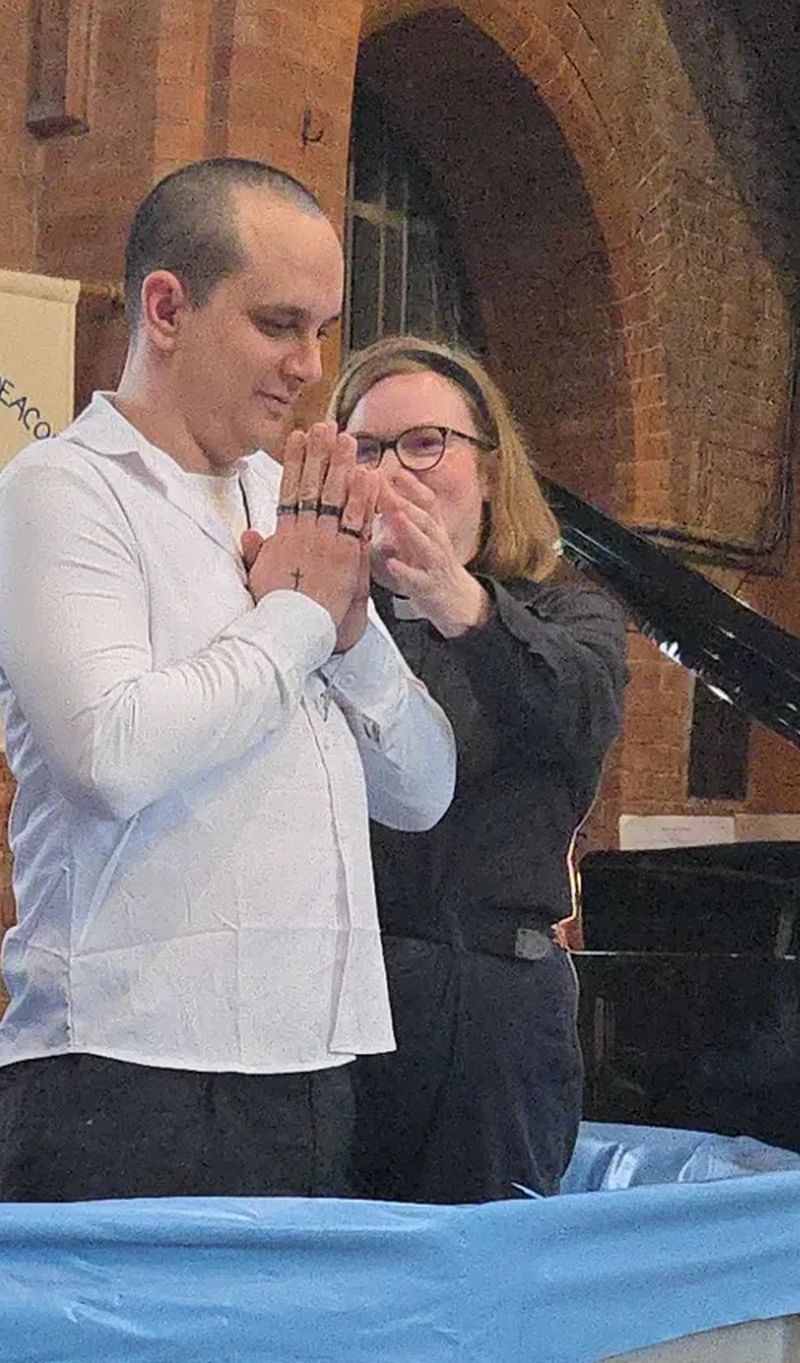
I stood there, water on my face, and I felt the one word I have for it: reborn. Not metaphorically, not in the polite sense that means refreshed. In a way that reached further than emotion and further than thought, as though a weight had been washed away that I had carried so long it had started to feel like part of me.
Then Chrissie, my wife, went under and came up to the same sound. Then two of our sons. We were baptised as a family that morning, four of us through the same water, our other boys around the pool as godparents and witnesses. Afterwards our vicar gathered us and anointed each of us with oil, the sign of the cross marked on our foreheads, a small still moment after all that noise, and it landed differently than I expected.
Two weeks later I watched a different baptism at St Philip's, the sprinkling of water on the forehead rather than full immersion. It was a beautiful service, and I mean that without qualification. But watching it, I was glad we had gone under. I am still finding words for why. Louder, perhaps. More complete. The difference between being touched by water and being taken into it.
If you were not raised in faith, if you assume that door closed somewhere in childhood and never reopened, I can only tell you it did not. I walked through it at thirty-seven with my questions intact and my family beside me. The water does not check where you have been.