
One Tuesday in November I led worship for the first time. It came at the end of an Old Testament session on the Psalms, part of the two-year Exploring Christianity course I am doing through church. This time it was my turn to lead the closing worship.
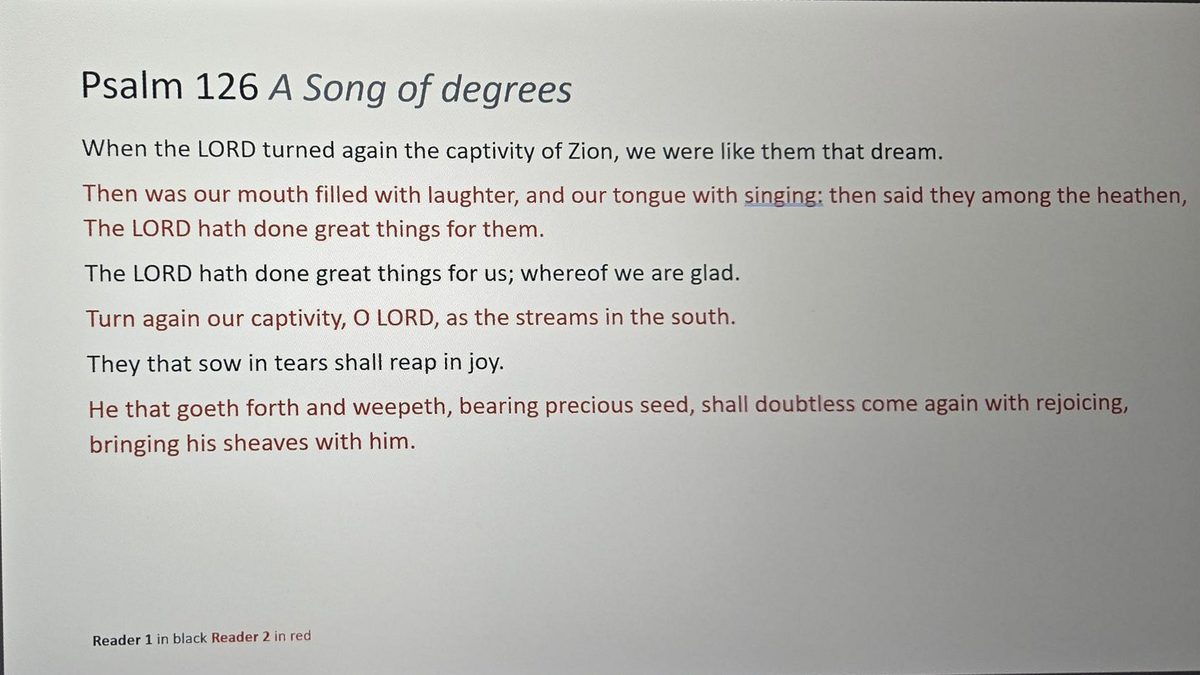
The study guide suggested a shape: a song, a responsive prayer, a psalm, a closing prayer. I kept the shape but did it my own way. Everything went on slides rather than a handout. I wrote an opening prayer on what the psalms give us, with the group’s responses in bold. Two readers shared Psalm 126 from the King James Version, three verses each. I sent the whole thing to Lydia, our vicar. She said it was fine to go as it was.
Then there was the music.
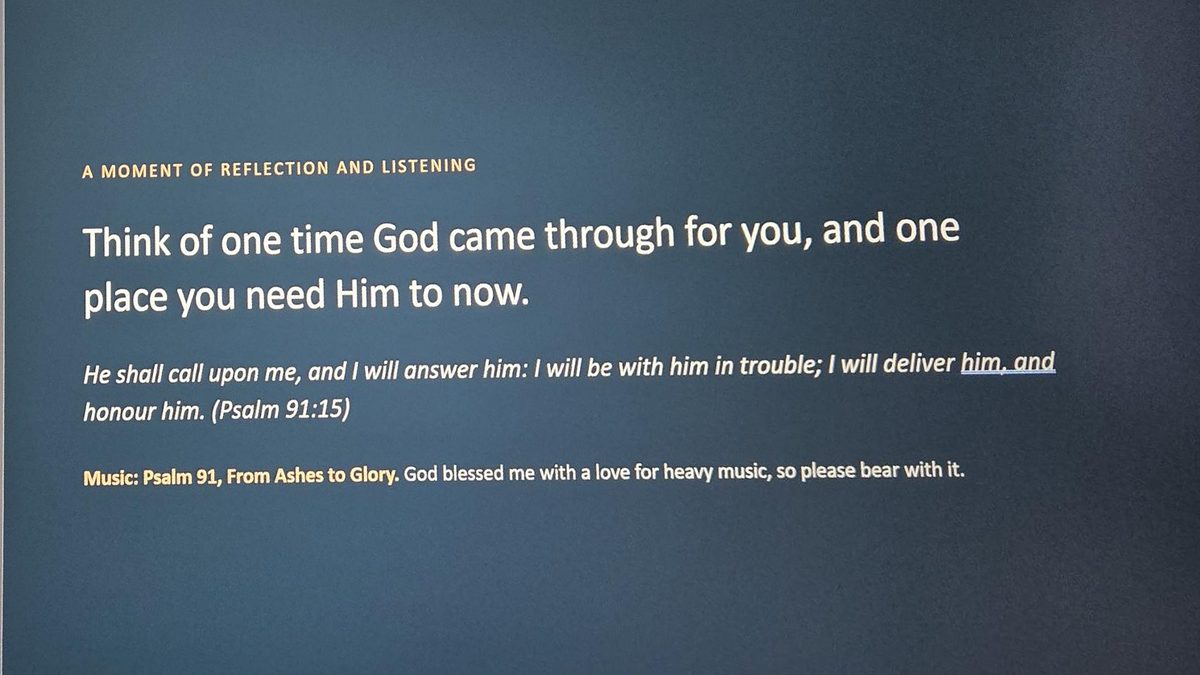
My taste runs to heavy rock, drums and guitars turned up, rather than the usual worship songs. I had found a band called From Ashes to Glory with a track built on Psalm 91, the psalm about God as a shelter in trouble. I picked ninety seconds from the bridge and put a line on the slide in front of it: God blessed me with a love for heavy music, so please bear with it. Under that went one verse from the psalm: ‘He shall call upon me, and I will answer him.’ The reflection asked two things. Think of one time God came through for you. Think of one place you need Him to now.
Six people came that night. I played the clip and faded it out before the closing prayer. Nobody said a word, about the music or any of it. The room went still. I stood at the front, wondering how it had gone down. There is a short stretch of screamed vocals in that bridge. I suspect that was new for most of them.
The session itself was what made the evening. We had spent it on what the psalms are for. Many of them are not praise at all. They come from sorrow, fear and anger. They are still prayers. Some echo older scripture, and some point forward to Christ. We also looked at Walter Brueggemann’s way of reading them in three seasons. Psalms of orientation, when life makes sense and God feels close. Psalms of disorientation, when it falls apart. Psalms of new orientation, when you come through to the other side. That new place is not the old security back again. It is a wiser faith that has been through something.
I had written the worship before I heard any of that. Looking at it afterwards, it was already there. Psalm 126 is about being restored, joy after tears. Psalm 91 is about trouble and the shelter in it. The reflection asked where God had come through, and where you still need Him. Without meaning to, I had put all three seasons on the screen.
That matters to me, because it describes where I am. Nobody warned me the questions get harder after you believe. The psalmists knew that. They complained to God, argued with Him, asked where He had gone, and kept praying. A faith that can say all of that out loud is one I trust more than one that only ever says thank you.
As for the silence, I still do not know what it meant. People might not have known how to respond to screamed vocals at a church course. They might have been still with it. They might not have liked it at all. Any of the three is possible. I cannot tell which.
What I do know is that I brought who I am into the room on purpose. The psalmists did the same. They wrote in the music of their day, about their own fear and their own relief. God took it as worship. If He can take a lament from a king hiding in a cave, He can take ninety seconds of loud guitars from a project manager in Swindon.